Portfolio Case Study
AsterPeak Revenue Operations Command Center
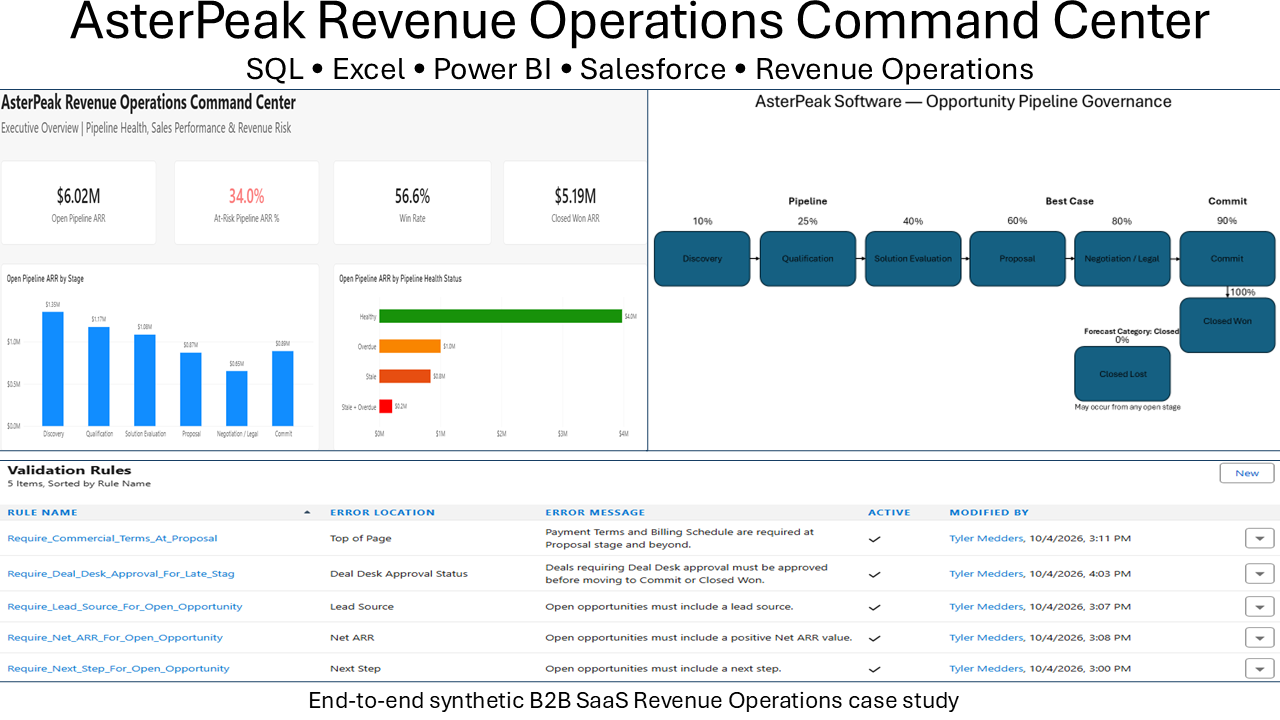
An end-to-end RevOps operating model built around a synthetic B2B SaaS CRM environment — connecting analysis, reporting, Salesforce governance, lead routing, pipeline management, forecasting, Deal Desk, and process documentation.
Business Context
Visibility alone was not enough.
AsterPeak Software is a fictional U.S.-based B2B SaaS company with approximately $15–20M in ARR and roughly 100 employees. The modeled revenue organization uses HubSpot for early marketing lifecycle activity and Salesforce as the primary sales system of record.
The core problem was broader than reporting. CRM data quality, lead routing, pipeline hygiene, forecast classification, and historical commercial-approval evidence all contained exceptions. The project was designed to identify those risks and then build a governed operating model around them.
Key Findings
The analysis surfaced material operating risk.
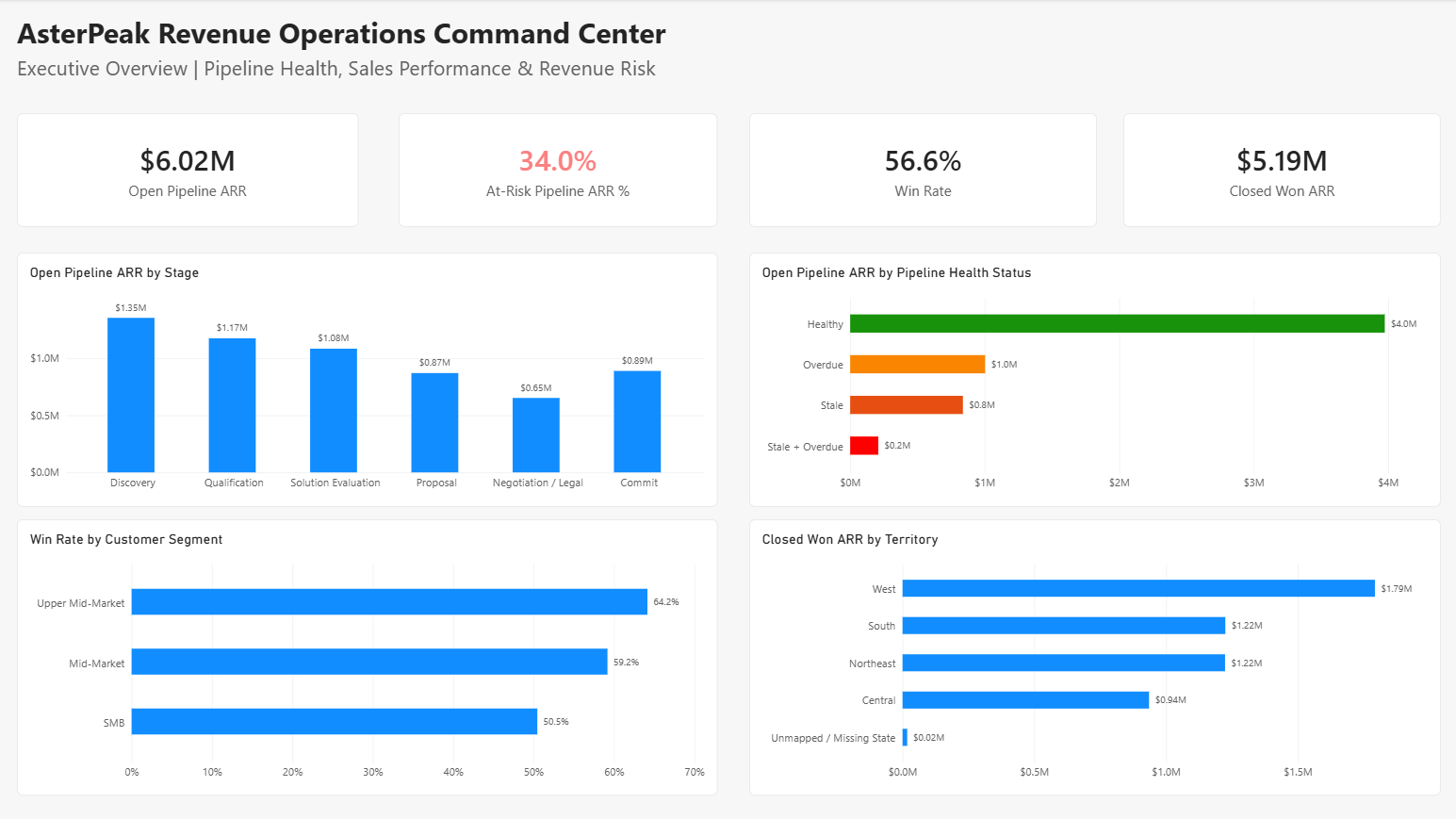
- 53 of 160 open opportunities were stale, overdue, or both — representing roughly 34% of total open pipeline ARR.
- 162 lead-routing exceptions included unassigned leads, territory mismatches, segment mismatches, and incomplete routing data.
- 38 of 885 forecast snapshots were misaligned with expected stage-based categories.
- 150 closed opportunities met modeled Deal Desk criteria, but only 61 had identifiable approval evidence.
- Deal Desk flagging logic achieved 97.6% accuracy across the modeled opportunity population.
Analytics
SQL, Excel, and Power BI were reconciled rather than treated as separate exercises.
SQL established the analytical logic and findings. Excel provided record-level audit and reconciliation workflows. Power BI turned those outputs into executive and diagnostic reporting across pipeline health, sales performance, lead funnel and source, forecast reliability, and CRM / Deal Desk governance.

Salesforce Governance
Findings were converted into preventative controls.
The Salesforce implementation demonstrates how RevOps can move from observing data-quality problems to preventing specific governance failures at the point of execution.
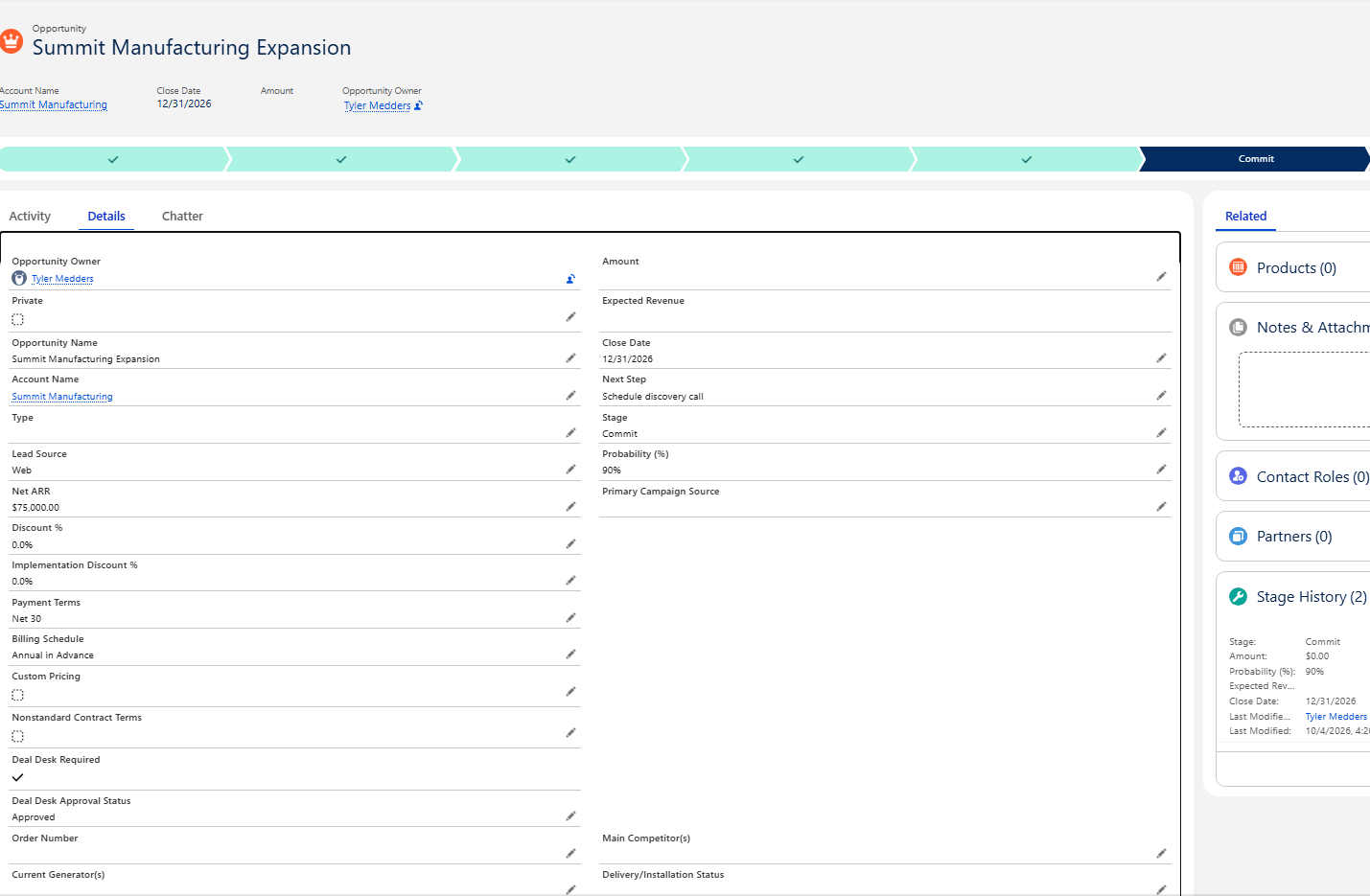
- Custom fields for Net ARR, discounting, implementation discounts, payment terms, billing schedule, custom pricing, nonstandard terms, Deal Desk requirement, and approval status.
- Formula logic to automatically identify opportunities requiring Deal Desk review.
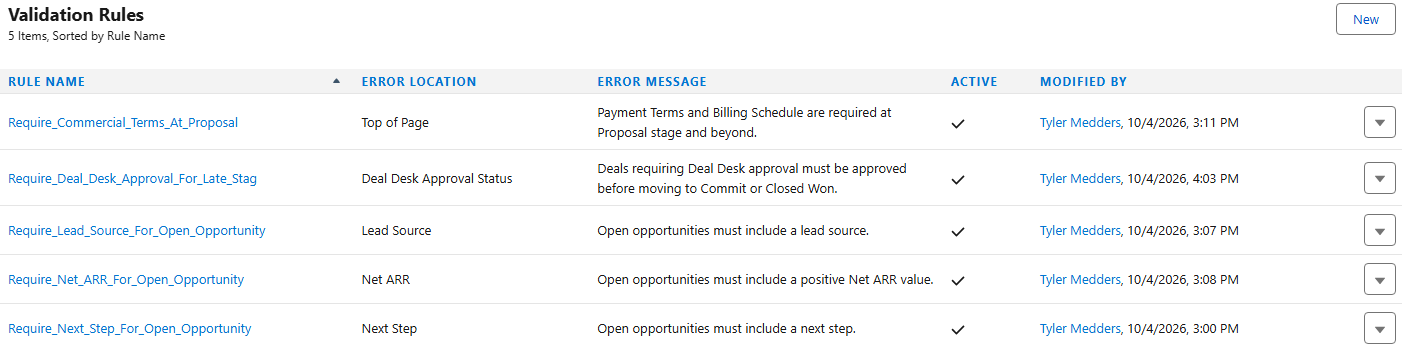
- Validation rules requiring critical opportunity information and blocking Deal Desk-required records from Commit or Closed Won until approved.
- Operational reports and a Salesforce governance dashboard for pipeline and approval visibility.
Process Design
The operating model was documented so the controls could be repeated.
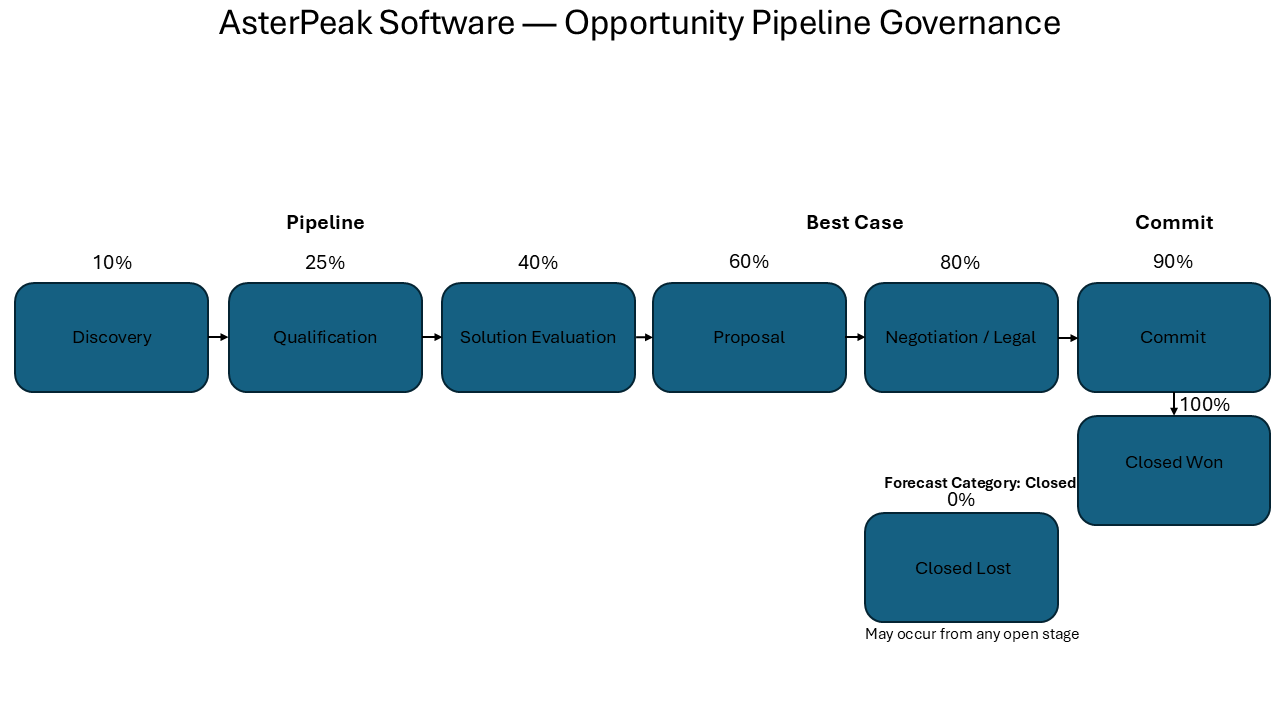
Three workflows were formalized: Marketing-to-Sales Lead Handoff, Opportunity Pipeline Governance, and Deal Desk Approval Workflow. Supporting SOPs define owners, triggers, escalation paths, and the expected management cadence.
Deliverables
Full project package
The public repository contains the analysis, source data, audit workbook, Power BI file and screenshots, Salesforce evidence, process maps, SOPs, executive recommendations, and final case study.